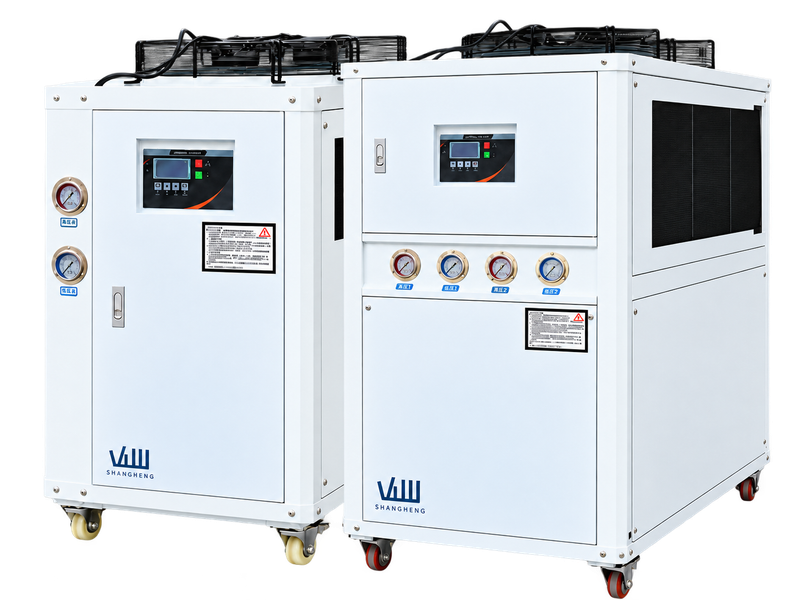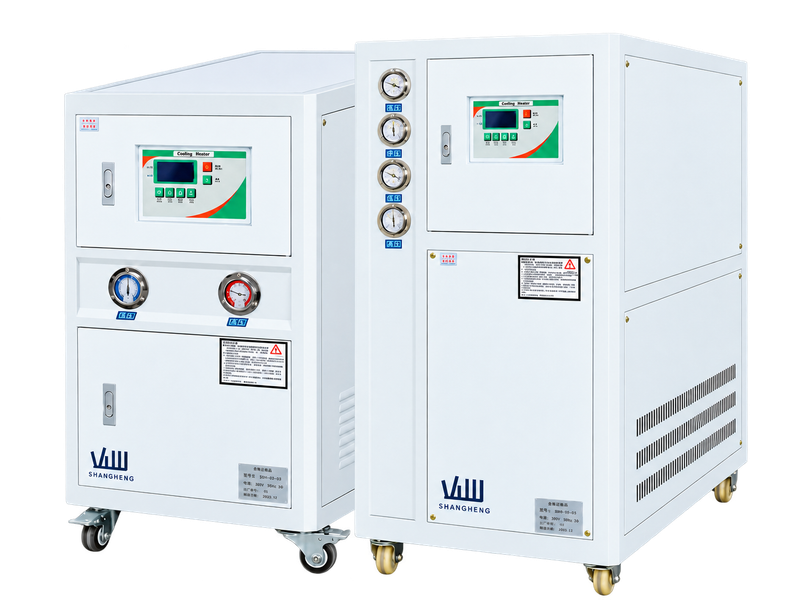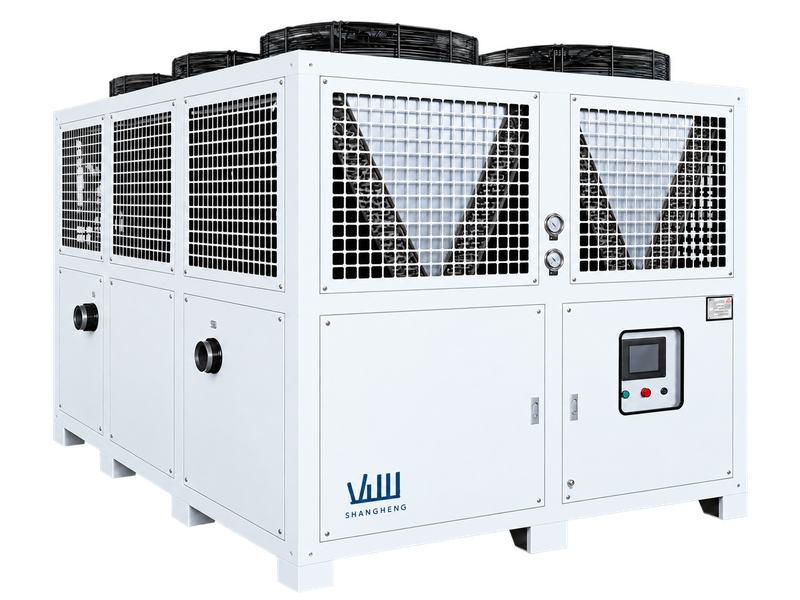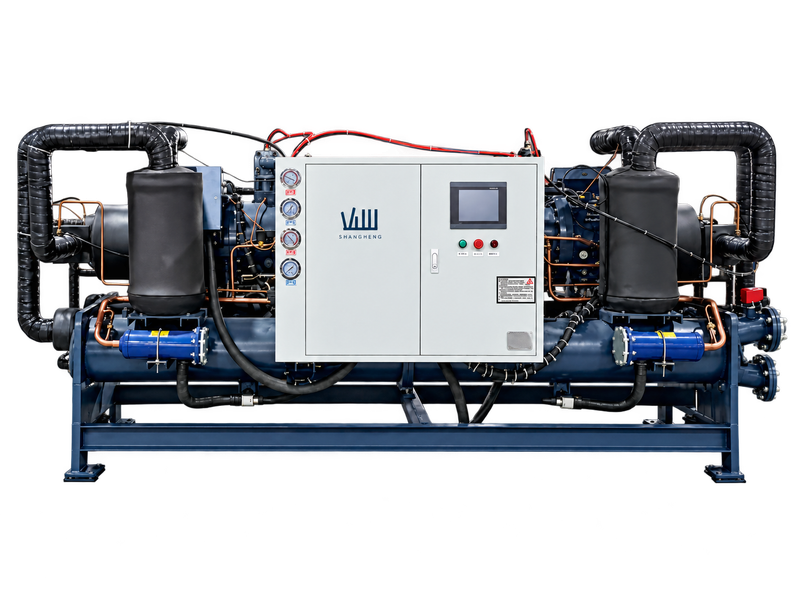
Air-cooled and water-cooled describe condenser heat rejection. An air-cooled chiller can still supply water to a process. Compare both options for the same cooling duty, then include site infrastructure and routine maintenance.
Start with available heat rejection
An air-cooled unit needs effective air exchange without hot-air recirculation. A water-cooled unit needs a suitable condenser-water circuit and heat-rejection system.
- If no condenser-water system exists, include its installation, space and maintenance.
- If one exists, verify temperature, available flow and spare capacity before planning a connection.
Compare equivalent selection conditions
Matching HP labels or headline capacities is insufficient. Each proposal should state process supply and return temperatures, flow and its condenser-side conditions.
- Record design inlet-air conditions for air-cooled equipment and condenser-water inlet conditions for water-cooled equipment.
- For long operating schedules, request selection data reflecting the expected load profile.
Compare the whole system cost
Include the chiller, pumps, heat-rejection equipment and maintenance. Better unit efficiency does not establish lower total cost at every site.
- List equipment, piping, electrical work, installation and maintenance to expose omissions.
- Calculate operating costs using consistent hours, loads and tariffs, and check savings against metered records under the corresponding conditions.
Include maintenance in the decision
Air-side heat exchangers and airflow paths need cleaning. Water-cooled systems require attention to water quality, heat exchangers and supporting equipment. Plan around available staff and access.
- Assign cleaning, inspection and any water-treatment duties.
- Document abnormal operating conditions and expansion plans before choosing a model.
Common Questions
Does an air-cooled chiller use no water at all?
Air-cooled refers to condenser heat rejection. A water-based process circuit still needs suitable circulating water, make-up provisions and maintenance.
Is a water-cooled system always more energy efficient?
That cannot be promised for every installation. Compare the same cooling duty and include the chiller, condenser-water pumps and heat-rejection equipment under the expected loads and site conditions.