
Shangheng Intelligent Technology manufactures and sells industrial chillers for production equipment that requires circulating-fluid cooling. Selection must address cooling capacity, flow, supply pressure and site heat rejection. Machine electrical power or an HP label alone is insufficient. Use the product comparison and purchasing checklist below to define a model, supporting equipment and supply scope.
Compare air-cooled, water-cooled and screw chillers
Air-cooled and water-cooled describe condenser heat rejection; screw describes the compressor type. Screw chillers are available in both heat-rejection arrangements. Establish the process duty and site infrastructure before comparing individual models.
| Product range | Conditions to assess | Confirm before purchase |
|---|---|---|
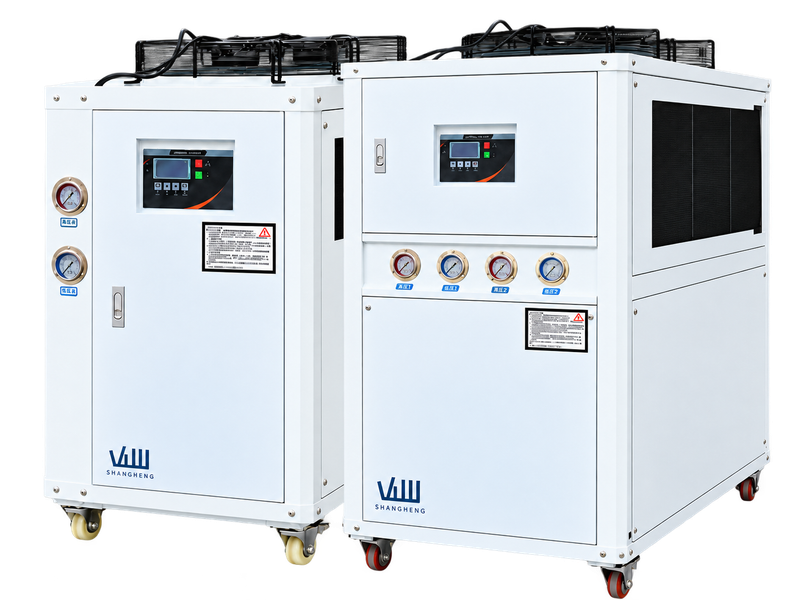
| Air-cooled industrial chiller | A suitable location is available for rejecting condenser heat to air | Maximum inlet-air temperature, exhaust path, cooling capacity, pump duty and installation space |
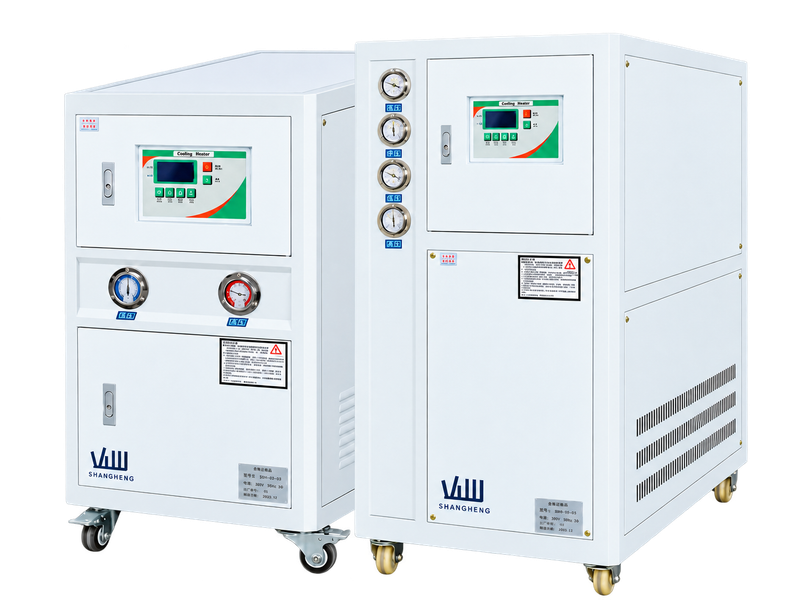
| Water-cooled industrial chiller | A condenser-water circuit and heat-rejection system exist or are planned | Condenser-water temperature, flow and quality, plus the supply scope for pumps and heat rejection |
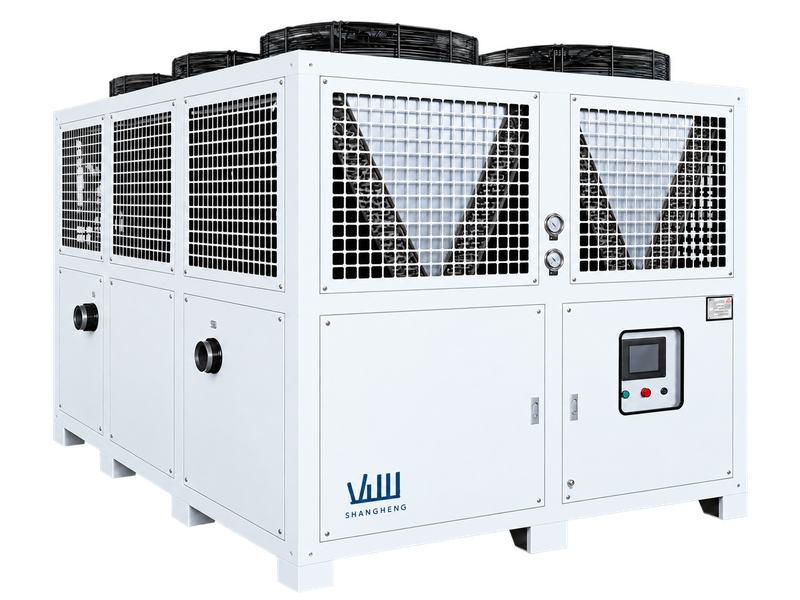
| Air-cooled screw chiller | A screw chiller is being evaluated with air-side heat rejection | Capacity at the target water temperature, load variation, airflow and maintenance access |
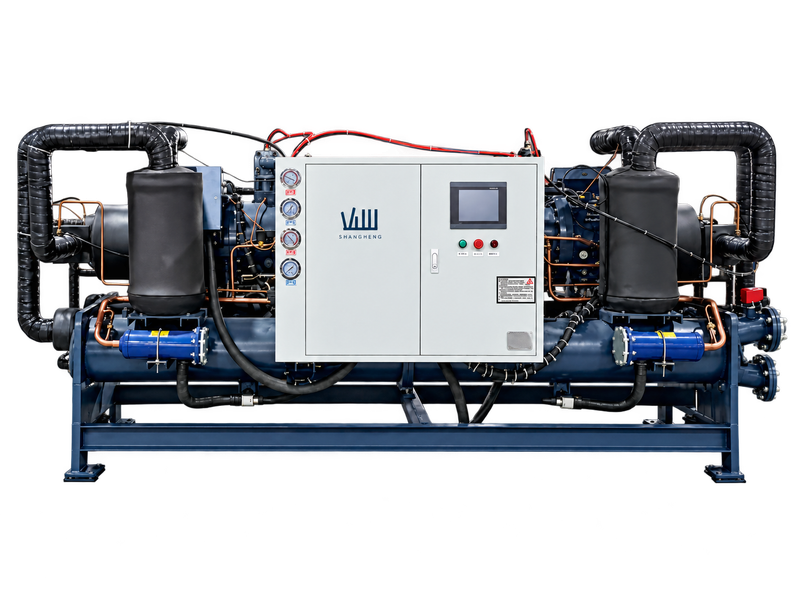
| Water-cooled screw chiller | A screw chiller is being evaluated with suitable condenser-water infrastructure | Chiller and water-system matching, part-load operation, maintenance and standby requirements |
- Compare the same supply and return temperatures, flow and design load. Rated capacity must refer to defined conditions.
- Include the chiller, pumps, piping and heat-rejection equipment. An HP label cannot replace cooling capacity or total input power.
List every cooling duty
Separate normal operation, peak demand and start-up cooling. For a shared system, identify which machines operate together and whether circulation must continue during shutdown.
- Provide equipment models, operating schedules, required inlet temperatures and permitted variation.
- For an existing system, collect synchronized supply and return temperatures, measured flow and production load. Otherwise, request heat-load data from the equipment supplier.
Check refrigeration and pumping separately
Verify cooling capacity at the required outlet temperature and site conditions. The pump must deliver the required flow against circuit resistance; its maximum flow and maximum head are not a simultaneous operating point.
- List pipe sizes and lengths, valves, filters and equipment pressure drop to establish the pump duty.
- Confirm fluid, water quality, wetted materials and any need to isolate the process circuit from a shared supply.
Choose a practical heat-rejection arrangement
Air-cooled equipment needs a suitable airflow path. Water-cooled equipment needs a confirmed condenser-water supply and heat-rejection arrangement. Check an existing water system before assuming it has spare capacity.
- Confirm service clearance, power, make-up water, drainage and pipe insulation.
- Define acceptable downtime and standby coverage before choosing a backup arrangement.
Agree on acceptance conditions
Specify test load, ambient conditions, sensor locations, instruments and the steady operating period. Keep original records and distinguish chiller outlet performance from temperatures at the process equipment.
- Record supply and return temperatures, flow, pressure difference, input power and production state.
- Document agreed alarm and interlock checks, results and outstanding actions.
Prepare an industrial chiller quotation request
Send equipment information and site photographs to Shangheng Intelligent Technology through WhatsApp to confirm the model and supporting equipment before quotation. If heat-load data is incomplete, start with the equipment supplier’s cooling-water requirements.
- Cooling duty: equipment models and quantities, simultaneous operation, heat load, supply and return temperatures, flow and permitted pressure.
- Site conditions: electrical supply, installation location, ambient temperature, pipe distances and available airflow or condenser-water facilities.
- Supply scope: pumps, tanks, filtration, control interfaces and accessories; assign transport, installation and commissioning responsibilities.
- Purchasing terms: quantity, delivery timing, taxes, warranty and acceptance conditions. Compare quotations on an equivalent scope.
Common Questions
Which industrial chillers does Shangheng Intelligent Technology offer?
The product ranges include air-cooled industrial chillers, water-cooled industrial chillers, air-cooled screw chillers and water-cooled screw chillers. Review the model specifications, then confirm the configuration for your heat load, target water temperature and site conditions.
Can I size a chiller from the machine’s total electrical power?
Not reliably. Only part of that power may reach the cooling circuit. Obtain the equipment supplier’s heat-rejection requirement or assess measured flow, temperature difference and operating records.
Can one chiller serve several machines?
A shared system can be evaluated, but simultaneous loads, branch flows and temperature requirements must be compatible. Different temperatures or fluids may require separate circuits or heat-exchanger isolation.