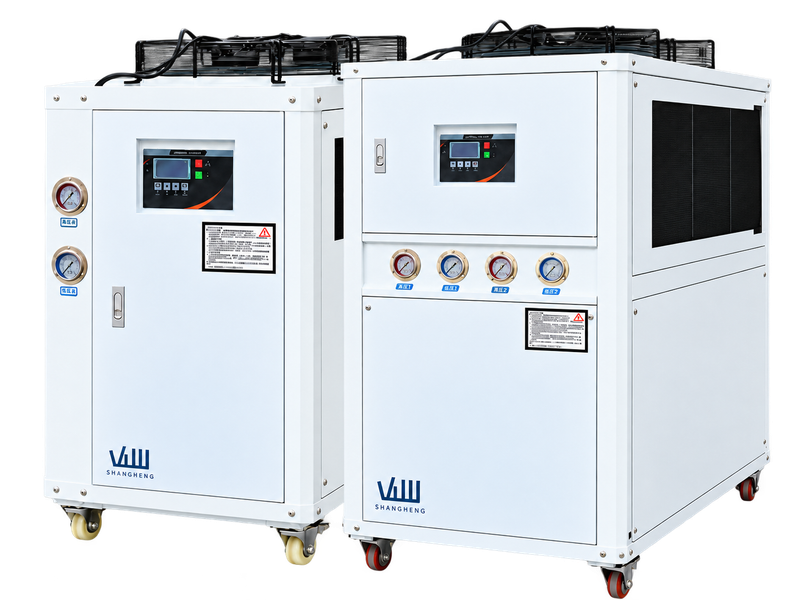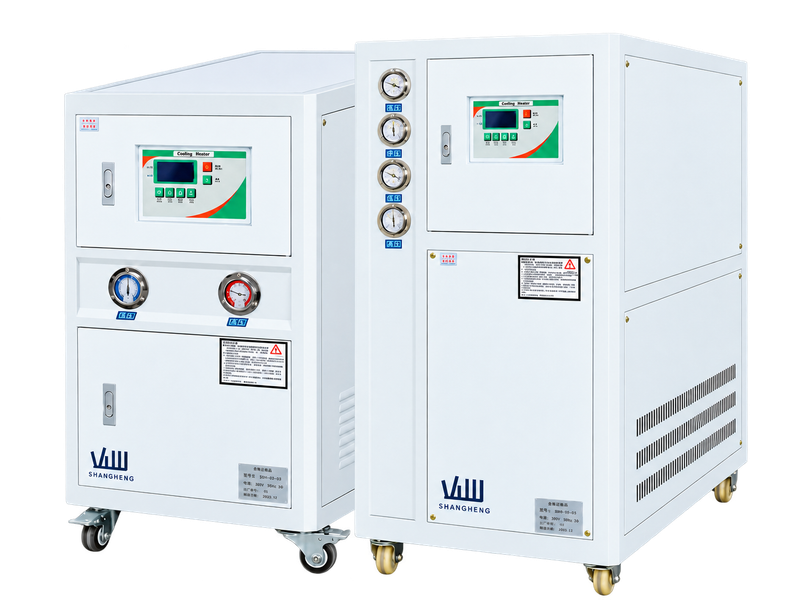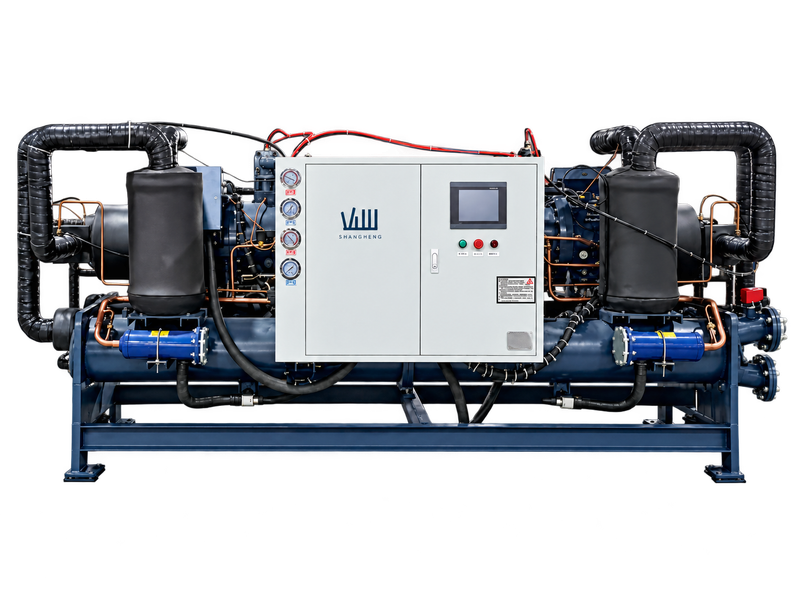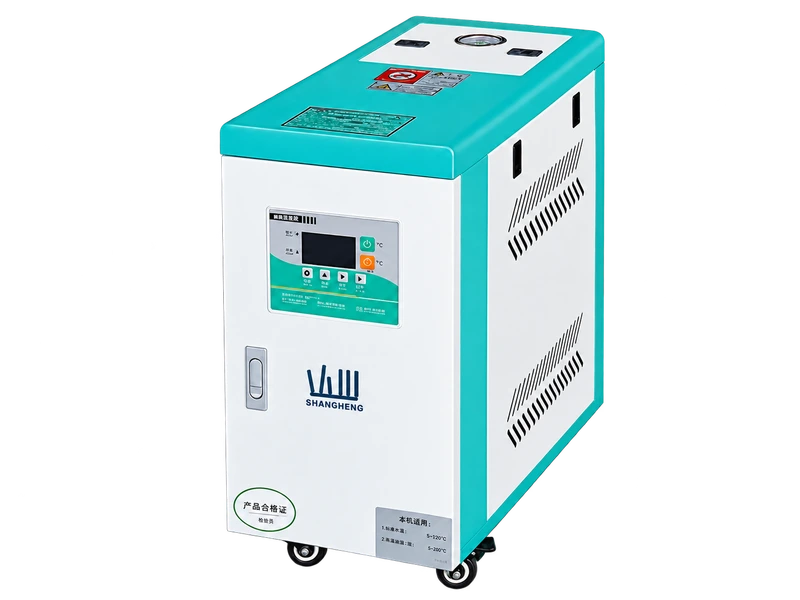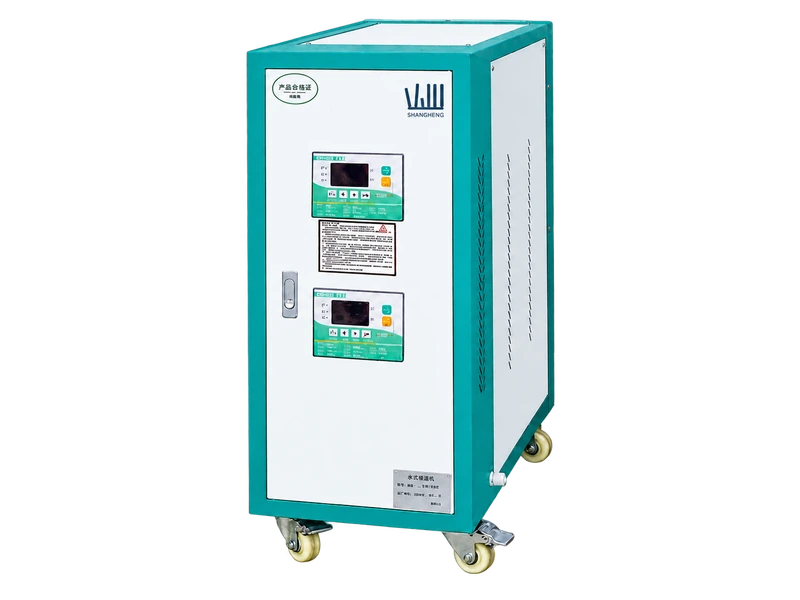
A calendering chiller applies where a cooling source must remove process heat; not every electrode calendering line requires one. Define heating, cooling and temperature-maintenance duties for start-up, steady production and changeover before selecting chillers, circulating temperature-control units or a combined arrangement. Match the configuration to the calender’s fluid, temperature, flow and control interfaces.
Separate roll-surface and fluid requirements
Calendering involves pressure, roll construction and temperature. Fluid supply temperature cannot stand in for the roll-surface temperature or its distribution across the roll width.
- Obtain the roll-surface target, permitted variation, number of zones and measurement method from the line and process owners.
- Specify heating and cooling actions for start-up, steady production, changeover and shutdown.
Select equipment for each duty
A chiller can be assessed where heat must be removed continuously. A water or oil temperature-control unit can be assessed where the circuit needs heating and circulating heat transfer. Combined operation requires a defined interface.
- Identify heating demand, heat-removal duty and the permitted time to reach process conditions.
- Assess independent control and isolation when different rolls require different temperatures.
Check fluid and pressure limits
The fluid must be compatible with roll passages, rotary unions, seals and pipes. Water and oil systems are not interchangeable; check every component’s permitted temperature and pressure.
- Collect interface drawings, flow and pressure-drop data, approved fluids and cleanliness requirements.
- Assign responsibility for sensors, filtration, venting, leak handling and shutdown interlocks.
Validate under defined process conditions
Agree on material, line speed, roll pressure and ambient conditions. Record fluid and roll-surface temperatures together using a surface-measurement method accepted by the line supplier.
- Retain steady-state, acceleration, deceleration and changeover records.
- Assess thickness and compaction through process inspection; they are not equivalent to a chiller temperature-control result.
Common Questions
Does a calender always require a chiller?
No. Establish whether heat must be removed by a cooling source and confirm the specified fluid and temperature. Heating, cooling and combined duties must be assessed separately.
Does stable chiller temperature prove a uniform roll surface?
No. Roll construction, flow paths, process load and measurement method also need assessment. Specify separate acceptance criteria for fluid supply and the roll surface.