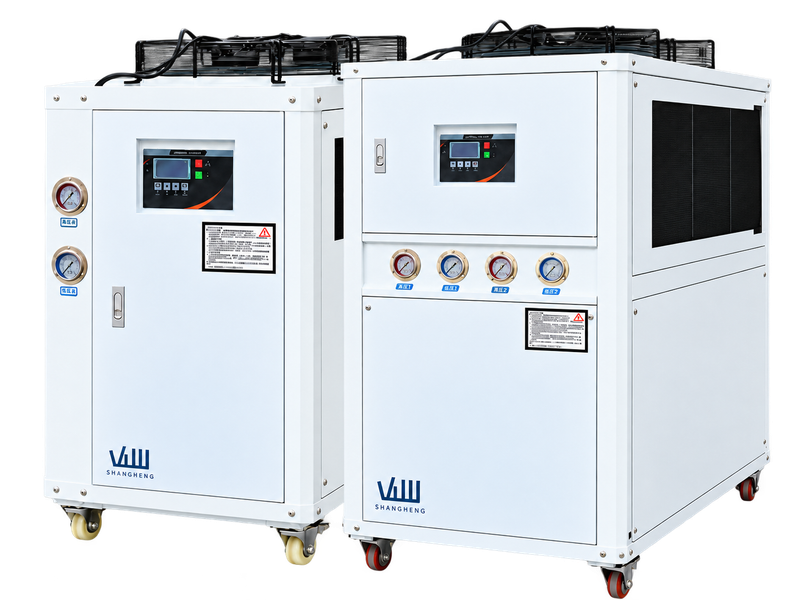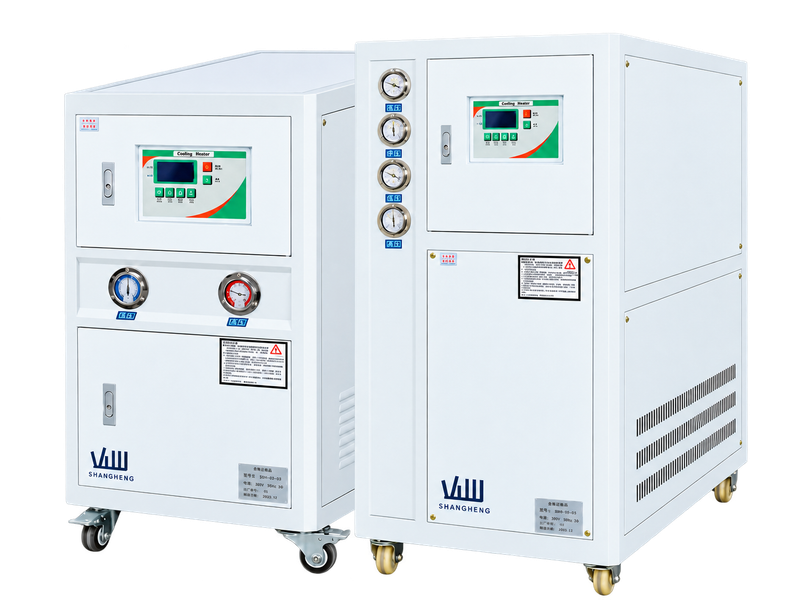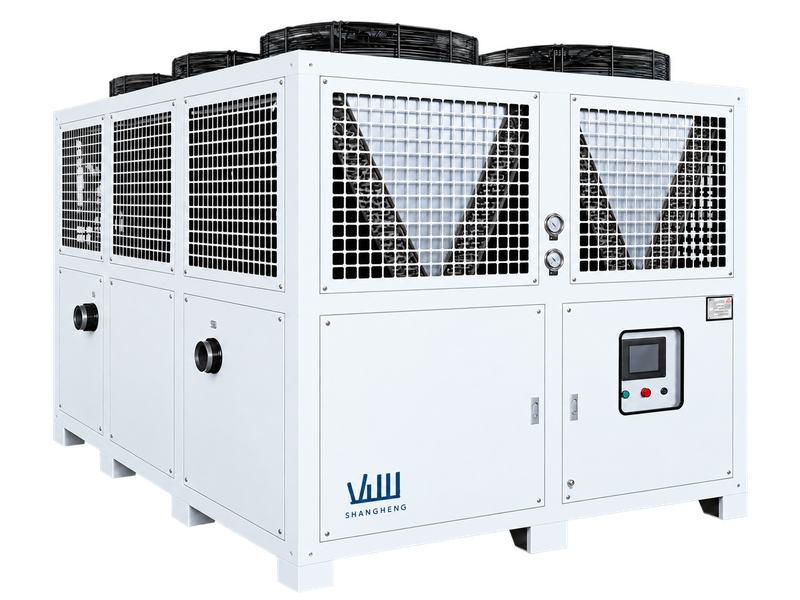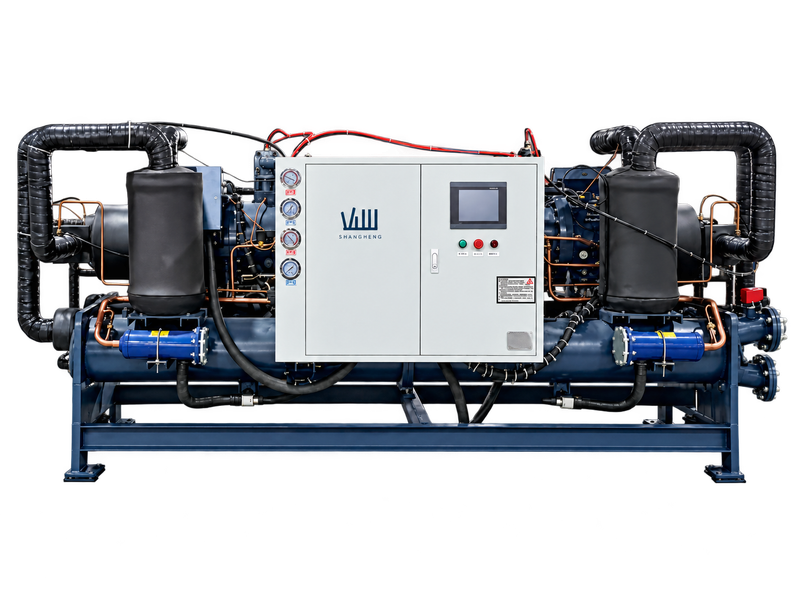
A coating-line chiller serves a defined circulating-water cooling duty. This scheme applies to electrode coating lines equipped with water-cooled rolls, where water removes heat transferred from the web after drying. Define the cooling-stage location and target temperature from the process requirements, then match the chiller to line speed, materials, heat load and circuit interfaces. The same configuration does not apply to every coating line.
Locate the cooling stage and define the target
The cited patent describes a water-cooled roll after a drying stage. For a specific line, distinguish chiller outlet temperature, roll-surface temperature and electrode temperature leaving the cooling stage.
- Provide the line model, coating arrangement, line speed, web width and number of cooling rolls.
- Ask the process owner to specify inlet conditions, acceptable outlet temperature and downstream requirements.
Describe the load across operating states
Prepare separate information for steady production, acceleration, deceleration and stops. Do not transfer a chiller size or temperature setting from a line with different materials or output.
- Request the line supplier’s cooling duty and water requirements first.
- Pair existing water-temperature and flow records with line speed and material information.
Review the complete roll-cooling circuit
Check the chiller, headers, branches, rotary unions and rolls as one circuit. The line documentation should define allowable pressure, required flow, fluid and cleanliness requirements.
- List each roll connection, branch pressure loss and available measurement locations.
- Assign responsibility for leak handling, filter maintenance and temperature alarms; assess circuit isolation if required.
Validate water and electrode temperatures together
Record circuit, roll-surface and web-exit temperatures under agreed material, speed and ambient conditions. The line owner must assess product quality using its inspection method; the chiller display alone cannot establish acceptance.
- Agree on instruments, measurement locations, sampling intervals and speed-change tests.
- Retain original records, abnormal events and corrective actions. Set numerical acceptance limits in the confirmed project specification.
Common Questions
Does every electrode coating line need the same type of chiller?
No. Materials, coating and drying processes have different interfaces and cooling duties. First identify a water-cooled roll or another defined cooling point on the actual line.
Is a lower water-temperature setting always better?
Select the setting using the process target, roll design, flow and site conditions, then verify the electrode temperature. Different materials, line speeds and cooling-stage designs require their own confirmed settings.