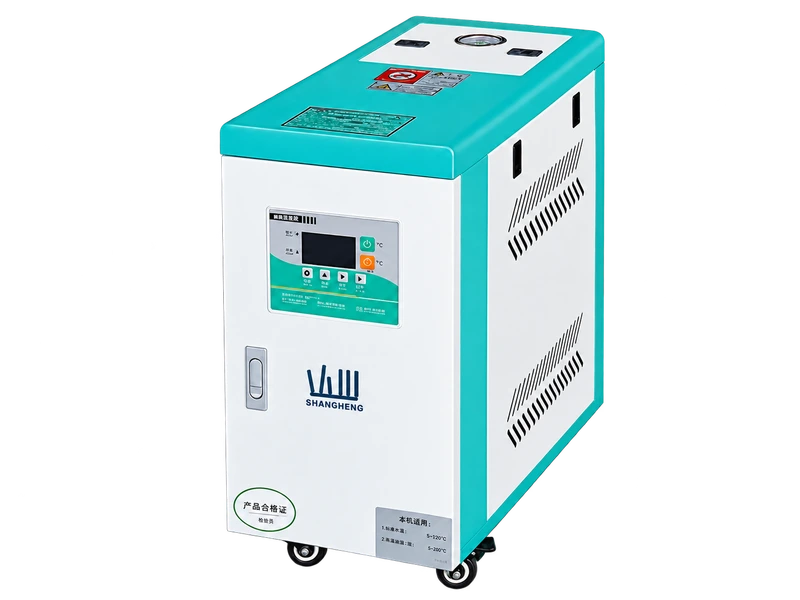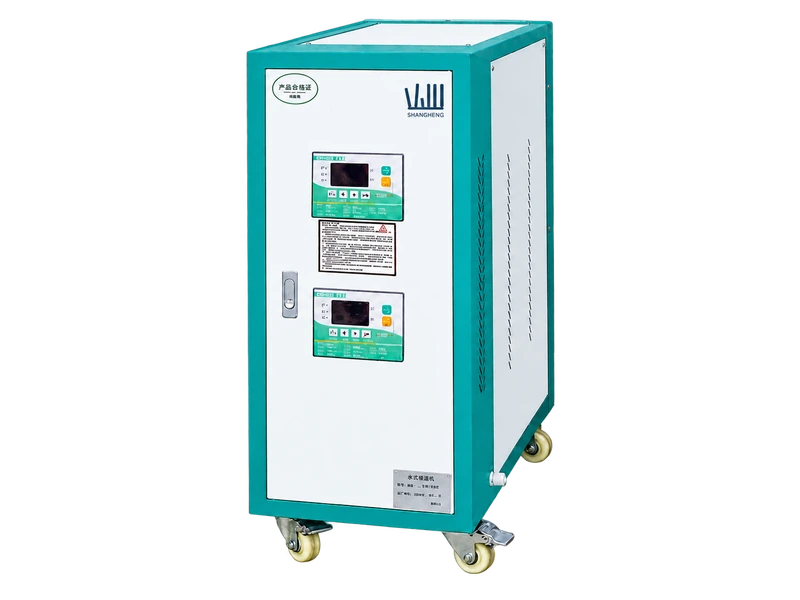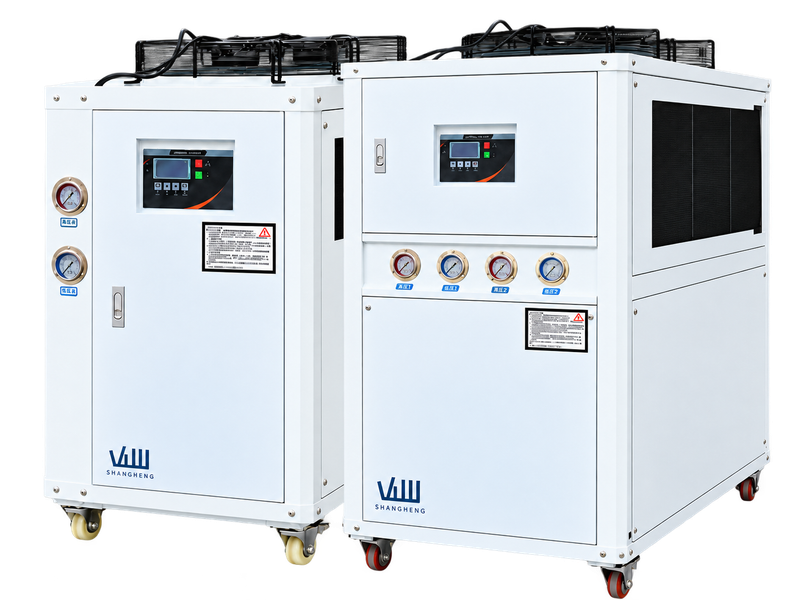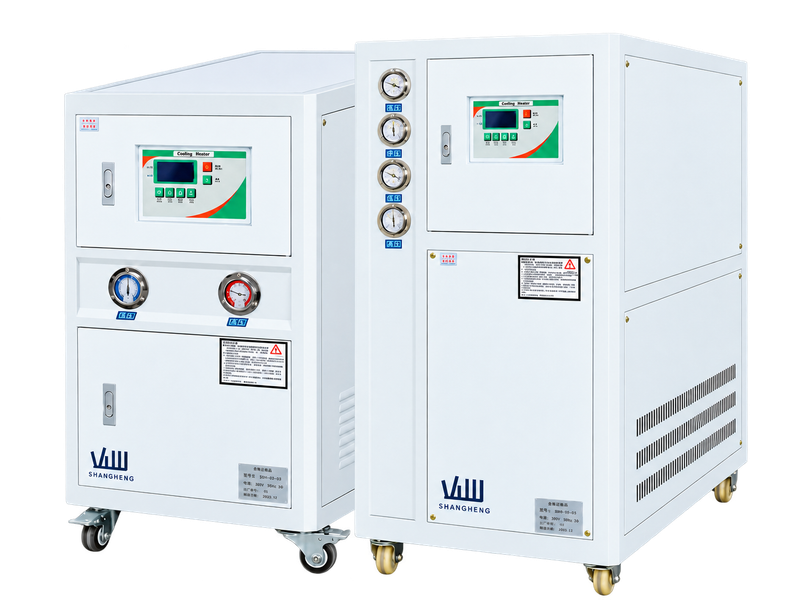
A mold temperature controller and a chiller have different roles. A controller typically circulates fluid and regulates heating and cooling to maintain a target. A chiller supplies a refrigerated cooling source. Whether both are needed depends on the process and equipment interfaces.
Separate heating and heat-removal duties
A mold that needs heating at start-up may need heat removal during production. Specify warm-up, steady-state load and cooling requirements separately.
- Define target temperature, permitted variation and warm-up time.
- Provide heating duty, heat-removal duty, flow and circuit pressure drop.
Identify how the controller cools
Cooling arrangements vary by model. A cooling heat exchanger does not establish that a unit contains compressor refrigeration. Check any external cooling-water temperature, flow and pressure requirements.
- Confirm direct or indirect cooling, cooling-source connections and fluid isolation for the selected model.
- Evaluate whether an existing facility-water supply can meet the required conditions.
Choose water or oil for the actual duty
Consider temperature range, equipment design, mold passages and maintenance. Water and oil systems have different operating limits; a single model’s limit is not a range-wide specification.
- Check permitted fluid temperature, pressure, seals and hose ratings.
- For a dual-zone unit, check each zone’s temperature, flow and load independently.
Define interfaces when combining equipment
When a chiller supplies a controller’s cooling source, draw the mold circuit and cooling-water circuit separately. Confirm connections, control signals and shutdown conditions using both suppliers’ interface documents.
- Record mold-circuit temperature performance separately from cooling-source supply and return conditions.
- Include start-up, production, cooling control and fault interlocks in acceptance records.
Common Questions
Can a controller with cooling replace a chiller?
Not necessarily. Determine whether it transfers heat to external cooling water or has independent refrigeration. Then assess whether the cooling source meets the required temperature and duty.
Is a temperature controller needed if a chiller is already installed?
It may not be needed for a simple compatible cooling-water duty. Warm-up, higher-temperature circulation or independent temperature zones may require additional temperature-control equipment.